Serious riskCPSC warnings
A CPSC warning, not a recall
The seller hasn't agreed to recall this product, so there's no refund, repair or replacement. CPSC says to stop using it.
CPSC warns of burn risk from Gourmia pressure cookers
The CPSC warns that Gourmia pressure cookers can pose a risk of serious burn injuries. The lid can open while the cooker is still pressurized, spraying hot contents, and the pressure indicator valve is hard to see. CPSC has received five reports of hot contents being expelled, four of which involved severe burns.
From the CPSC notice · Read the official notice ↗
What to do
- Stop using the Gourmia GPC625 pressure cooker immediately.
- Dispose of the pressure cooker. Do not sell or give it away.
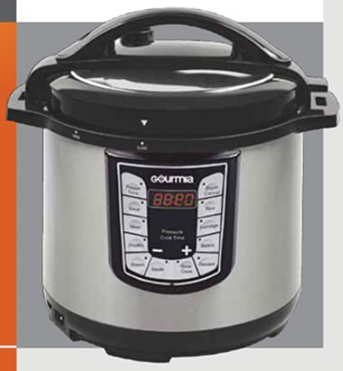
- Check the model number GPC625 on the product. The cooker has a six-quart digital display, a pressure lid, and stainless steel and black plastic finishes.
- Report any injury or product defect at www.SaferProducts.gov.
Is yours affected?
Compare your label or packaging with the product in the warning.
- Product
- Gourmia Pressure Cookers
- Sold at
- The pressure cookers were sold
- Sold in
- Nationwide
- Made for
- All ages
Details
- Units affected
- About 43,500
- Injuries reported
- CPSC has received five reports of incidents in which hot contents were expelled under pressure; in four cases, severe burn injuries were reported. There have been at least two lawsuits filed by consumers alleging burn injuries.
- Illnesses reported
- Yes
- Manufactured in
- China
- Warning number
- 26-280
In the CPSC's words
- Description
- WASHINGTON, D.C. – The U.S. Consumer Product Safety Commission (CPSC) is warning consumers to immediately stop using Gourmia Pressure Cookers because they pose a risk of serious injury due to burn hazards. The lid on the pressure cooker can open while it is still pressurized, causing hot contents to spray out, resulting in severe second degree burn injuries to consumers. Most of these pressure cookers were sold at Best Buy. In addition, the pressure cooker’s float valve, which is designed to raise when there is pressure in the product, and drop when there is no pressure, is located inside the handle, and is difficult to see. Consumers may not see that the float valve is still raised and may reasonably think it is safe to open the lid when the pressure cooker is under pressure. The pressure cooker also has incorrect volume markings on the inner pot. This can cause consumers to overfill the pot and hot food and liquids to be ejected when the pressure cooker is vented using the quick release method or opened while its contents are pressurized. The importer, the Steelstone Group, LLC doing business as Gourmia, of Brooklyn, N.Y., and the retailer, Best Buy Co., Inc. of Richfield, MN, which sold most of the products, have refused to agree to an acceptable recall to address this hazard. CPSC has received five reports of incidents in which hot contents were expelled under pressure; in four cases, severe burn injuries were reported. There have been at least two lawsuits filed by consumers alleging burn injuries. About 43,500 pressure cookers were sold between 2017 and 2020 at Best Buy, other retailers, and e-commerce platforms for between $50 and $80. The pressure cookers are digital pressure cookers, with a cooking chamber capacity of six quarts, stainless steel and black plastic finishes, a pressure lid, a digital temperature and function display, and button controls. The model number is GPC625. These products were manufactured in China. CPSC urges consumers to stop using the pressure cookers immediately and dispose of them. Do not sell or give away these hazardous pressure cookers. Report any incidents involving injury or product defect to CPSC at www. SaferProducts.gov. Under section 6(b) of the Consumer Product Safety Act, the CPSC is required to include with this press release any comments from the manufacturer or a summary thereof. The company objects to this press release.
- Hazard
- The pressure cookers pose a risk of serious injury due to burn hazards.
- What CPSC says to do
- CPSC urges consumers to stop using the pressure cookers immediately and dispose of them. Do not sell or give away these hazardous pressure cookers.